
Septic pumping on the South Coast
Septic Tank Pumping in Coos Bay, Coquille and the South Coast
Septic tank pumping removes the sludge and scum that collect in a septic tank so they cannot flow out into the drain field. Econo Rooter Services, Inc. pumps residential and commercial septic tanks across Coos County, northern Curry County and Reedsport from its office in Coquille, Oregon, as an Oregon DEQ licensed septic pumper (#38122).
- Oregon DEQ licensed septic pumping (#38122)
- Homes, businesses and WPCF systems
- One team for pumping, repairs and inspections
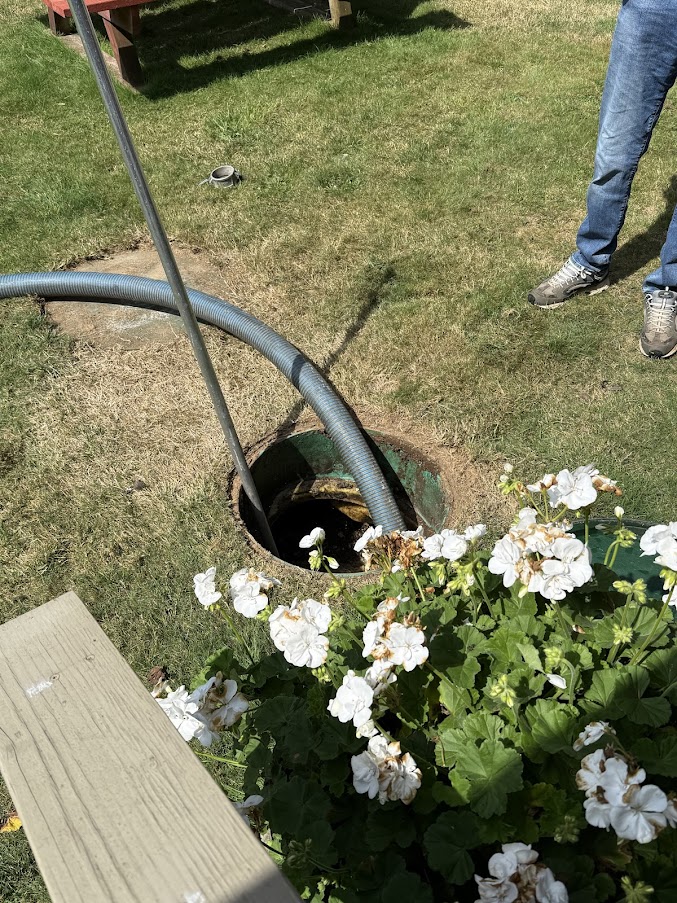
How septic tank pumping works
Why Pumping Protects Your Drain Field
Everything that goes down the drains in a home on septic ends up in the tank. Inside, it separates into three layers: heavier solids sink to the bottom as sludge, grease and lighter material float to the top as scum, and the liquid in the middle flows out to the drain field for treatment in the soil.
Bacteria in the tank break down some of the solids, but not all of them. Over time the sludge and scum layers grow until there is less room for the liquid to settle. When that happens, solids can be carried out of the tank and into the drain field pipes, where they clog the soil the whole system depends on. Pumping resets the tank before it gets to that point.
A drain field clogged by solids is a much bigger job than a tank pumped on schedule, which is why pumping is the most routine part of owning a septic system. On the southern Oregon coast, the wet season adds another reason to stay ahead of it: when soil stays saturated through winter, a drain field already struggling with solids has even less capacity, so it often makes sense to pump before the rains set in.

How often to pump
How Often Should a Septic Tank Be Pumped?
Household septic tanks are typically pumped every three to five years, according to the U.S. Environmental Protection Agency, but the right interval for a specific property depends on tank size, how many people live there and how much water the household uses.
| Factor | How it affects pumping frequency |
|---|---|
| Tank size | A larger tank holds more solids before it needs pumping. |
| Number of people | More people means more wastewater and faster buildup of sludge and scum. |
| Water use and laundry | Heavy water use moves more wastewater through the tank. |
| Garbage disposal | Food waste adds solids, so tanks with a disposal fill faster. |
| Advanced treatment unit | Systems with pumps, float switches or treatment units generally need inspection about once a year, according to the EPA, plus pumping as the maintenance provider advises. |
| Commercial use | Restaurants and other high-use facilities can fill a tank much faster than a household. |
The simplest way to stay on schedule is to keep a record of every pumping date. If you do not know when the tank was last pumped, that alone is a good reason to call. For a longer guide, read how often to service a septic tank.
Warning signs
Signs Your Septic Tank Is Full
A septic tank that needs pumping usually shows it in more than one way. These are the signs to watch for between scheduled pumpings.
Slow drains throughout the house
When sinks, tubs and toilets all drain slowly at the same time, the tank or the line to it is the likely cause rather than a single clog.
Gurgling drains or toilets
Gurgling can mean wastewater has nowhere to go and air is being pushed back up through the pipes.
Sewage odors outside
Strong odors near the tank lids or over the drain field point to a tank that is overfull or not working as it should.
Wet or spongy ground over the drain field
Standing water or soggy ground over the drain field outside of heavy rain can mean effluent is surfacing.
Unusually green grass over the drain field
A patch that grows faster and greener than the rest of the yard can be a sign of excess effluent below it.
Backups at the lowest drains
Water coming up in a floor drain, tub or shower means the system cannot take more. See what to do while you wait.
Our septic pumping services
Septic Pumping for Homes, Businesses and Treatment Systems
Residential septic pumping
Routine pumping for houses, cabins and rentals on septic, from in-town lots to rural acreage between Reedsport and Gold Beach. Most homes only need it every few years, which makes it easy to forget, so a pumping record helps.
Commercial and WPCF systems
Restaurants, shops and facilities put more through a septic system than a household does, so tanks fill faster. Econo Rooter pumps commercial tanks and maintains systems operating under a WPCF permit.
Advanced treatment units
Properties with Orenco AdvanTex or other treatment units need both tank pumping and scheduled service of the unit itself, which Econo Rooter provides as a registered service provider.
Tanks that are backing up
When a tank is overflowing or wastewater is backing up into the building, call (541) 396-4804. Pumping relieves the immediate problem, and the visit is a chance to find out why the tank filled.
Pumping cost
What Affects the Cost of Septic Tank Pumping?
The cost of septic tank pumping depends on the size of the tank, how long it has been since the last pumping, how easy the lids are to reach and where the property is. Econo Rooter Services quotes after assessing the specific property rather than quoting a flat figure.
To get a quote, call (541) 396-4804 or send the request form with your address, the tank size if you know it, and when the tank was last pumped.
Tank size and compartments
Larger tanks and tanks with two compartments hold more to pump.
Time since the last pumping
A tank that has gone many years between pumpings holds more sludge.
Lid access
Lids on risers at ground level are quicker to open than lids buried under soil, decks or landscaping. Here is how to find your septic tank lid.
Site access and distance
Long driveways, steep or soft ground and how close the truck can park all shape the visit.
Other work on the same visit
Repairs, a real estate inspection or treatment unit service add to the scope.
What to expect
What Happens During a Septic Pumping Visit
Locate and open the tank
The technician confirms where the tank is and exposes the lids. Knowing where they are ahead of time speeds this up (how to find your septic tank lid).
Pump the tank
Sludge and scum are pumped out through the access opening into the vacuum truck.
Look over what is visible
With the tank open, the technician looks at what can be seen, such as the inlet, the outlet and the liquid level, and tells you about anything that needs attention.
Close up and note the date
Lids are secured and you have the service date, so the next pumping can be planned.
Why Econo Rooter Services
Why South Coast Property Owners Call Econo Rooter for Pumping
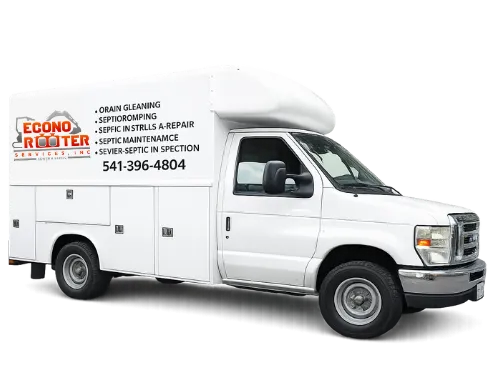
Econo Rooter Services has handled septic work on the southern Oregon coast since 2000 and holds an Oregon DEQ septic pumping license. Because the same company also repairs septic systems, installs new ones and performs real estate inspections, a pumping visit that turns up a problem does not mean starting over with a different contractor. The team knows how the wet coastal climate and rural sites affect septic systems, and explains what it found before recommending anything beyond the pumping itself.
Frequently asked questions
Septic Pumping Questions
How long does it take to pump a septic tank?
The time it takes to pump a septic tank depends mostly on the size of the tank, how full it is and how quickly the lids can be reached. Lids that are buried or hard to find add the most time, so knowing where they are before the visit helps the job go faster.
What happens if you don't pump your septic tank?
If a septic tank is not pumped, sludge and scum keep building until solids are carried out into the drain field. The solids clog the soil the system depends on, which can lead to sewage backups in the house, wastewater surfacing in the yard and drain field damage that is a much larger job to fix than pumping.
Is septic tank pumping the same as septic tank cleaning?
Septic tank pumping and septic tank cleaning usually describe the same service: removing the accumulated sludge and scum from the tank with a vacuum truck. If you have a specific concern, such as a tank that keeps filling quickly, mention it when you call so the visit covers it.
Can a septic tank be pumped during the rainy season?
Septic tanks can be pumped year-round, but wet weather can make access harder and saturated ground leaves a drain field with less capacity to work with. Routine pumping is often easier to schedule in the drier months, while a tank that is backing up should be pumped whenever it is needed.
Does Econo Rooter Services pump commercial septic tanks?
Econo Rooter Services pumps commercial septic tanks for restaurants, shops and other facilities, and provides ongoing maintenance for systems operating under a Water Pollution Control Facilities (WPCF) permit. Commercial tanks often fill faster than household tanks, so they are usually pumped on a shorter schedule.