Residential site evaluations
A review of the soil, drainage and existing system layout on a home's property, with findings that show whether maintenance, a repair or an upgrade makes sense.

Septic site evaluations
A septic site evaluation looks at the soil, drainage and site conditions on a property to show what a septic system there needs. Econo Rooter Services, Inc., a DEQ licensed septic company based in Coquille, evaluates residential and commercial properties across Coos County, northern Curry County and Reedsport, and documents the findings so owners can plan a repair, an upgrade or a new system with confidence.
What the evaluation covers
A septic system only works if the soil under its drain field can treat wastewater before it reaches groundwater. An Econo Rooter site evaluation reviews the conditions that decide that: the soil, how water drains across the property, the layout of any existing system, and how the system as a whole is working. Each evaluation is documented, so the findings can guide maintenance, a repair, an upgrade or a new installation.
The same features matter in Oregon's official permitting process. Oregon county site evaluation reports, prepared under Oregon Administrative Rules chapter 340, division 71, list what an official evaluator looks at:
For a new or replacement system, Oregon also requires an official site evaluation by the county onsite program or DEQ before a permit is issued. That process, and how it replaced the old perc test, is explained further down this page.

When it applies
Property owners usually ask for a site evaluation when a decision depends on what the ground and the system can handle. For a new house on land that has never been evaluated, DEQ's site evaluation guide says an official evaluation is required before a septic permit.
Need an existing system checked instead? That is a different service: a real estate septic inspection documents the condition of a system already in the ground, and septic pumping handles routine tank care.
Our septic evaluation services
A review of the soil, drainage and existing system layout on a home's property, with findings that show whether maintenance, a repair or an upgrade makes sense.
For businesses, an assessment of usage demands, system condition and compliance needs, so the system matches how the property is used. Ongoing care is covered under commercial septic maintenance.
Before buying or selling a property, documentation of its septic site conditions to inform the decision. For a formal record of an existing system, see real estate septic inspections.
A check of the drain field for saturation, poor absorption or structural problems, together with an evaluation of the soil, to confirm whether it is draining as it should.
Perc test vs site evaluation
Oregon septic approvals are based on an official site evaluation, not a perc test. County guidance describes the site evaluation as taking the place of the largely obsolete percolation test. It is carried out by the county onsite program or DEQ, which records soil and groundwater conditions in test pits and checks the property for setbacks before a permit can be issued. DEQ notes that an evaluation does not guarantee any particular system type or approval.
Getting ready
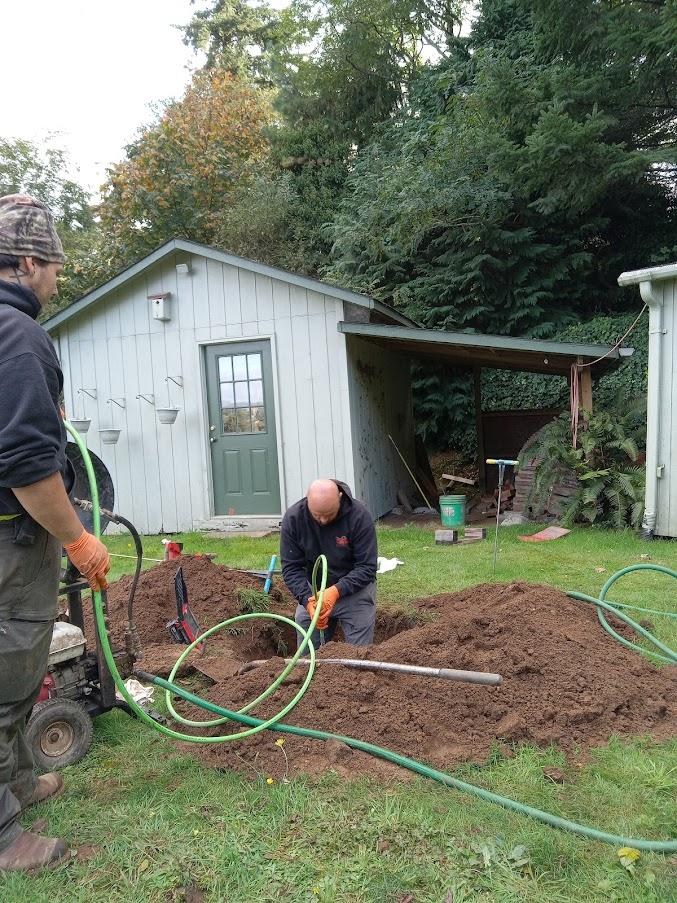
To prepare for Oregon's official septic site evaluation, choose a dry test area outside the required setbacks, dig the test pits to DEQ's guidance, keep them safe and open, and mark them so the evaluator can find them. DEQ does not accept the application until the pits are ready.
On the South Coast, the wet months bring groundwater closer to the surface, and that is exactly what an evaluator looks for in the pit walls. Test pits also hold water and can be harder to dig and keep open in winter. Talk with the county onsite program or DEQ about timing before scheduling the work.
Pick the driest part of the property, outside the setbacks from wells, streams, property lines and buildings. DEQ's guidance says to avoid filled or disturbed ground, shallow soil over rock or hardpan, and spots where wet-ground plants such as willows, rushes and mint grow.
Applications are not accepted until the test pits are dug. DEQ's test pit guidance calls for at least two pits in the proposed drain field area, about 75 feet apart, with a bottom at least 2 feet wide and 4 feet long and one end sloped or stepped for safe access.
Spoils are piled at least 2 feet back from the edge so the soil walls stay clean and the evaluator can climb in safely. Pits stay open until the visit.
Flag each pit on a tall pole, mark a trail if the pits cannot be seen from the road, and show the pits, property lines, wells, buildings and planned development on the site plan that goes with the application.
Our process
The layout, age and use of any existing system are documented, along with how the property is used, to set a clear starting point.
The tank, lines and access points are checked where a system exists, looking for wear, performance problems or signs of failure.
Drainage across the property, soil conditions and how the whole system is performing are evaluated together.
A plain summary of what was found, with practical recommendations for maintenance, repairs or future improvements.
Why choose Econo Rooter Services, Inc.
A useful site evaluation comes from knowing how soil conditions, system age and usage patterns affect septic performance on the South Coast. Econo Rooter Services has worked on septic systems in Coos County since 2000, and its evaluations are built to surface problems before they turn into failures, with clear findings and practical next steps rather than a bare pass or fail.
The company holds Oregon DEQ Installer License #38122 and a DEQ septic pumping license, and is an installer of advanced treatment technologies including Orenco AdvanTex and Delta Whitewater units. When an evaluation points to work, the same team handles pumping, repairs and installations and treatment unit maintenance. Homeowners, buyers, businesses and real estate professionals can review every license on the certifications page.
Site evaluation questions
A septic site evaluation is the Oregon process that decides whether a property can support a septic system and what type and size it needs. An onsite specialist from the county or DEQ examines soil test pits in the proposed drain field area and the replacement area, then issues a report. A favorable report is needed before a septic construction permit can be issued.
Oregon septic approvals do not rely on the traditional perc test. County guidance describes the site evaluation as taking the place of the largely obsolete percolation test, using an examination of soil test pits, groundwater evidence, slope and setbacks to decide whether a site is suitable.
In Coos County, site evaluations and septic permits are handled by the county's Onsite Septic Program. In Curry County, DEQ handles residential septic permitting directly from its Medford office. Other Oregon counties, including Douglas County where Reedsport is, use a local agent under contract with DEQ.
DEQ's guidance calls for at least two test pits in the proposed drain field area, spaced about 75 feet apart, and larger systems can need more. The evaluator may also ask for additional pits if the first ones do not show a suitable area.
A site evaluation that does not find a suitable area explains why in the report. Depending on the property, additional test pits in a different area can be evaluated, a different system type such as an advanced treatment unit may be allowed, or DEQ's report review process may apply. A site evaluation does not guarantee any specific type of system or approval.
For Oregon's official site evaluation, the application fee is set by the county onsite program or DEQ, and preparing the required test pits is a separate cost that depends on access and ground conditions. For an Econo Rooter site evaluation, the price depends on the property and the system, and a quote is given after learning about the site.