
Septic Pumping
For tanks that are due for routine service, have gone years without pumping, or need emptying before a repair or inspection.

Septic system services
Econo Rooter Services, Inc. provides septic services for homes and businesses across Coos County, northern Curry County and Reedsport, from septic tank pumping and inspections to repairs, new system installation, advanced treatment unit maintenance and commercial WPCF maintenance. As an Oregon DEQ licensed septic installer and pumper based in Coquille, the team works on every part of a septic system.
How septic systems work
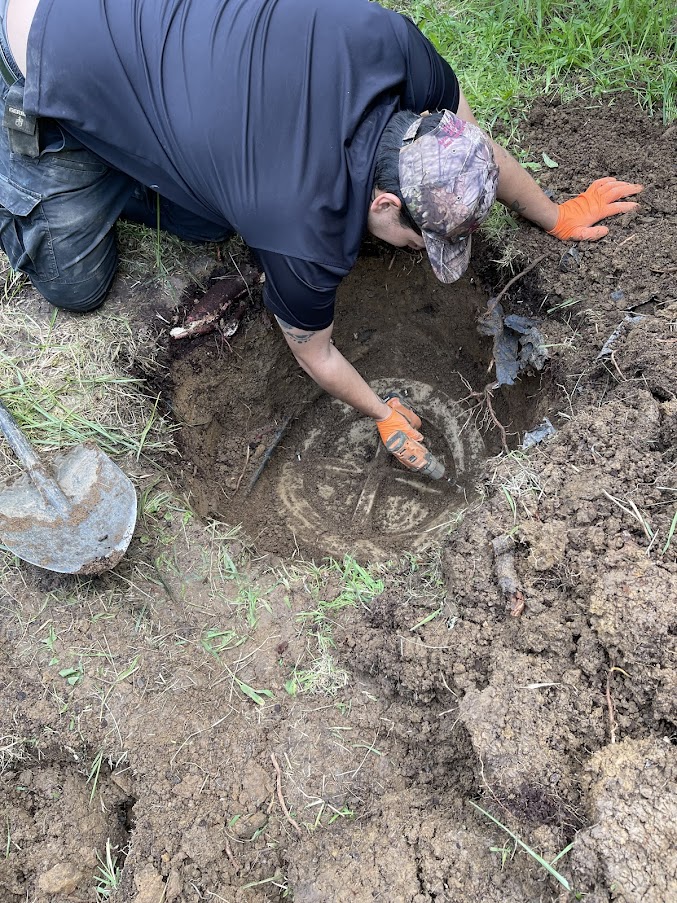
A septic system treats household wastewater on the property instead of sending it to a city sewer. Wastewater flows from the house into a buried septic tank, where solids settle to the bottom as sludge and grease floats to the top as scum. The liquid in between, called effluent, flows out to a drain field, where it soaks into the soil and is treated as it moves through it.
Because the solids stay in the tank, they build up over time and have to be removed by septic pumping. When they are not, they can move into the drain field and clog the soil, which is a far harder problem to fix than a full tank.
Types of septic systems
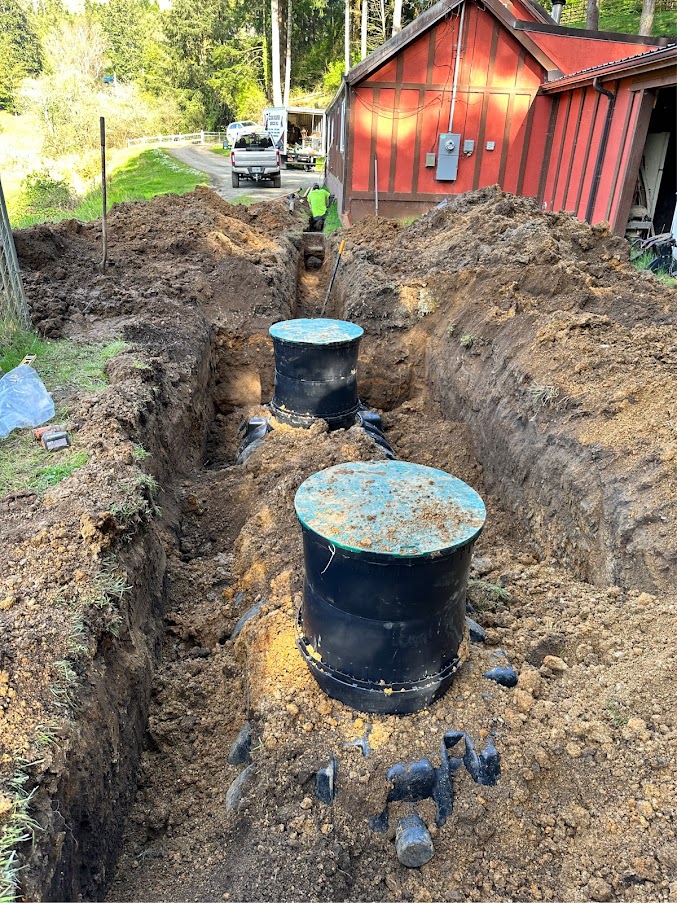
The main types of septic systems are conventional gravity systems, pressure distribution systems, sand filter systems and advanced treatment systems, plus larger permitted systems for commercial properties. Which type a property uses depends on its soil, groundwater depth, slope and lot size, as determined by a site evaluation.
| System type | How it works | Usually used where | What it needs |
|---|---|---|---|
| Conventional gravity system | Effluent flows downhill from the tank into drain field trenches by gravity. | Soil drains well and groundwater sits deep enough. | Periodic inspection and tank pumping. |
| Pressure distribution system | A pump doses effluent evenly through small pipes across the drain field. | Sloped lots, shallower soils, or where even distribution matters. | Pump, float and alarm checks along with tank pumping. |
| Sand filter system | Effluent passes through a lined bed of sand for extra treatment before it reaches the drain field. | Sites where the soil alone cannot provide enough treatment. | Regular inspection of the filter, pump and controls. |
| Advanced treatment unit | A packaged unit, such as an Orenco AdvanTex system, treats effluent to a higher level before dispersal. | Difficult sites with high groundwater or limited space. | Scheduled maintenance by a registered provider. |
| Commercial or WPCF system | Larger systems serving businesses or multiple buildings under a Water Pollution Control Facilities permit. | Facilities with higher wastewater flows. | The maintenance required by the permit. |
Not sure which type of system your property has? The septic permit, an as-built drawing or a past inspection report usually says, and an inspection can confirm it on site.
Our septic services
For tanks that are due for routine service, have gone years without pumping, or need emptying before a repair or inspection.
For failed components, a drain field that has stopped accepting water, or a property that needs a new or replacement system.
For a lot that needs a septic system for the first time, or a replacement system where site conditions have to be confirmed.
For properties with an AdvanTex or similar treatment unit that needs service on a set schedule.
For businesses and facilities whose onsite systems operate under a Water Pollution Control Facilities permit.
For buyers, sellers and agents who need the condition of a septic system documented before closing.
System lifespan
How long a septic system lasts depends on the tank material, the soil, how the system is used and how consistently it is maintained. The tank often outlasts the drain field, and a drain field overloaded with solids or water can fail long before the tank does. There is no single number that fits every property, which is why a system's condition is judged by inspection rather than by age alone.
Septic system maintenance
Septic system maintenance is shared between the property owner and a septic professional. The owner controls what goes into the system day to day, while a professional inspects it, pumps the tank when needed and services any pumps or treatment units.
The U.S. Environmental Protection Agency recommends having a typical household system inspected by a septic professional at least every three years, and systems with pumps, float switches or other mechanical parts inspected more often, generally once a year. For day-to-day habits that protect a system, read septic tank maintenance basics.
Septic care over time
A new system starts with an evaluation of the soil and site, which decides the system type and layout before a permit is issued.
The tank, any pump or treatment unit, and the drain field are installed by a DEQ licensed installer and inspected before use.
Over the years, the tank is pumped when it needs it, the system is inspected, and pumps and treatment units are serviced on schedule.
When a component fails it is repaired, and when the property sells, a real estate septic inspection documents its condition.
Why Econo Rooter
Septic work in Oregon spans several licenses and certifications, and Econo Rooter Services holds them under one company: Oregon DEQ licenses as a septic installer and septic pumper, DEQ certification for real estate septic inspections and for septic system operation and maintenance, recognition as a DEQ maintenance provider for advanced treatment systems, and registration as an Orenco AdvanTex service provider.
That means the same local team can evaluate a site, install the system, pump and inspect it for years afterward, service its treatment unit and document its condition when the property sells. Econo Rooter Services has worked on the South Coast since 2000, operates from its office in Coquille, and has earned over 300 Google reviews from customers across the South Coast. See every license on the certifications page.
Septic questions
The U.S. EPA recommends having a typical household septic system inspected by a septic service professional at least every three years. Systems with pumps, float switches or other mechanical components, such as advanced treatment units, should be inspected more often, generally once a year. How often the tank itself needs pumping is a separate question that depends on tank size and household use.
How long a septic tank lasts depends mainly on what it is made of, the soil around it, and how well the system is maintained. A tank that is pumped when needed and protected from heavy loads can serve a property for many years, and the drain field often needs attention before the tank does. An inspection is the reliable way to judge a system's condition.
Keep grease and cooking oil, wipes (including those labeled flushable), paper towels, feminine products, coffee grounds, paint, solvents and other harsh chemicals out of a septic system. These either do not break down in the tank or harm the bacteria that treat the waste, and they can clog the tank outlet and the drain field.
A septic inspection and septic pumping are different services. An inspection checks the condition of the tank, its components and the drain field, while pumping removes the sludge and scum that collect in the tank. The two are often done on the same visit, since an empty tank is easier to inspect.
The property owner is responsible for maintaining a septic system on their property, including inspections, pumping and repairs. Properties with advanced treatment units also need ongoing service from a maintenance provider, and facilities operating under a WPCF permit must meet the maintenance requirements written into that permit.