A repair usually makes sense when
- One crack, break or root entry point is causing the problem
- The rest of the pipe is in good condition
- A single section has sunk and can be re-laid
- The line is a modern material with years of life left
Sewer mainline repairs and installations
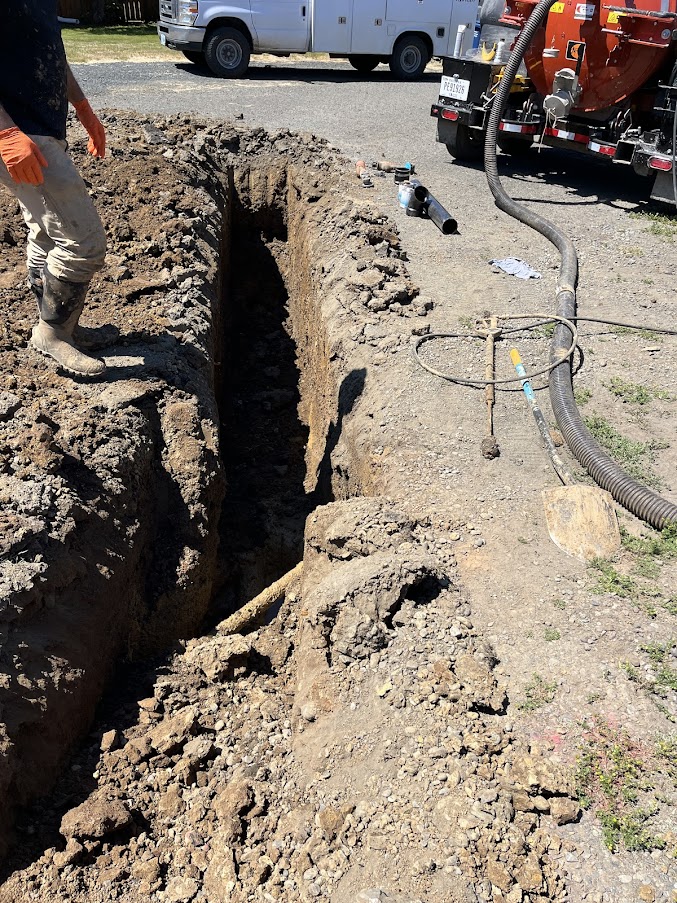
Sewer line repair fixes a damaged section of the pipe that carries wastewater from a building to the sewer main. Replacement swaps out the line when the damage is widespread, and installation runs a new line for new construction or an upgrade. Econo Rooter Services, Inc. repairs, replaces and installs sewer lines for homes and businesses across Coos County, northern Curry County and Reedsport.
Tell us what you are seeing and whether the line has been cleaned recently, or call (541) 396-4804.
When cleaning is not enough
A clogged sewer line can be cleaned. A damaged one keeps causing problems after it is cleaned, because the pipe itself is broken, sagging or failing. Catching the damage early protects the foundation, landscaping and plumbing around the line. These signs point to damage rather than buildup:
If the problem is a fresh clog with no history, start with sewer line cleaning or hydro-jetting. If the same line keeps failing, it is time to look at repair.
Repair or replace
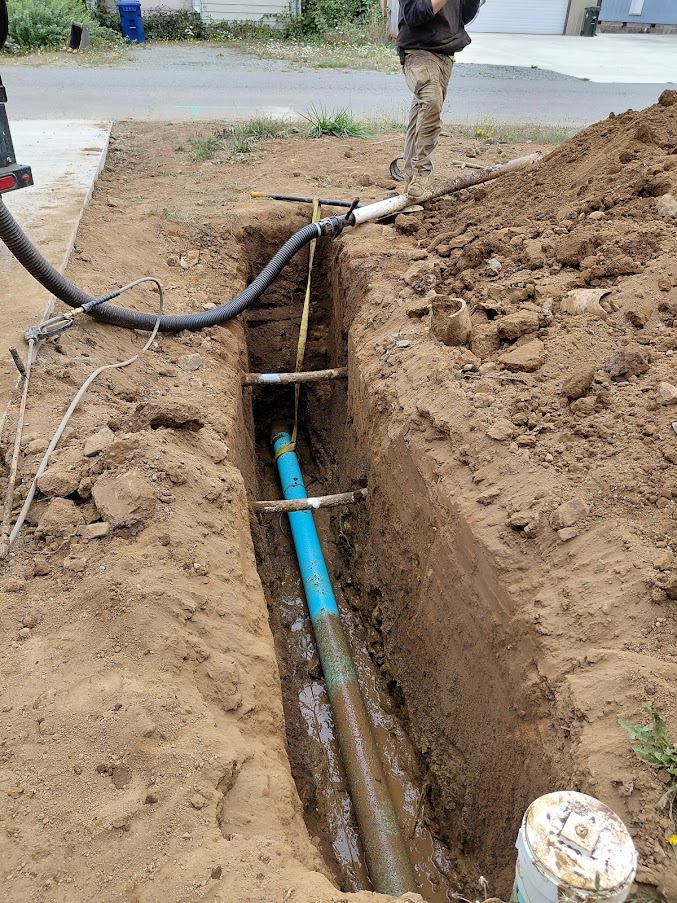
A sewer line is usually repaired when the damage is limited to one section and the rest of the pipe is sound, and replaced when the damage runs along much of its length. The evaluation of the line decides which, and the options are explained before any digging starts.
What is under the yard
Many South Coast homes still drain through the sewer line they were built with. Knowing what that pipe is made of explains a lot about the problems it causes, and whether a repair will hold or the line is reaching the end of its life.
Clay sewer pipe was laid in short sections with many joints. Over time those joints shift and open, which lets roots in and lets soil wash into the line.
Orangeburg is a fiber pipe bonded with pitch that was used in the mid-1900s. It tends to soften and flatten under soil pressure, narrowing the line until it backs up.
Cast iron is strong but corrodes from the inside over time. Rough, scaled walls catch waste and can eventually crack or rust through.
When the ground under a section settles, the pipe dips and holds water and waste instead of draining. The same spot clogs again and again until it is re-laid.
Our sewer repair and installation services
Repairs for leaks, cracks, breaks and root damage in residential and commercial sewer lines, restoring flow while protecting the structures around the line.
Full replacement when damage is widespread or the pipe is failing, giving the property a line built to handle years of daily use.
New sewer line installation for new construction and system upgrades, planned for long-term performance and compliance from the start.
Installing a cleanout on the line so it can be reached for cleaning and maintenance without going through a fixture inside the building.
Cleanouts and permits
A sewer cleanout is a capped pipe that rises from the sewer line to ground level, usually just outside the building, giving direct access to the line for cleaning and inspection. Many older homes were built without one, which means every cleaning has to go through a toilet or an indoor drain.
With a cleanout, the line can be cleared from outside without removing a toilet, and future maintenance is quicker and less disruptive inside the home or business.
A repair or replacement is a practical time to install a cleanout, since the line is already exposed and the access point can be placed where it will be easiest to reach.
The Oregon Plumbing Specialty Code, adopted by the state Building Codes Division, covers the installation, repair and replacement of plumbing systems, and local building departments require permits and inspections for sewer line work.
Oregon city guidance on sewer laterals notes that the work must be done by the property owner or a licensed contractor, and that owners should check a contractor's status with the Construction Contractors Board.
Our process
Each project starts with an assessment of the sewer line to find the damage, any capacity problems or upgrade needs, so the work is planned accurately.
The scope of work and timeline are explained, along with a quote, so the owner knows what will be done before anything begins.
The repair, replacement or new installation is carried out carefully, with quality materials and attention to the property around the line.
The finished line is tested for proper flow, and the work is reviewed with the owner before the job is closed out.
Why choose Econo Rooter Services, Inc.
Sewer line work happens underground, so it depends on understanding the ground it runs through. Econo Rooter Services knows South Coast ground conditions and the aging sewer lines under many local properties, and plans each project carefully, uses quality materials and gives honest recommendations about whether a repair will hold or a replacement makes more sense.
The company holds an Oregon plumbing license (#6-81PB) and a Construction Contractors Board license (CCB #143577), and handles residential, commercial and multi-unit sewer lines. Before and after a repair, the same team can provide hydro-jetting and rooter service to keep the line clear. Licenses can be checked on the certifications page.
Sewer line repair questions
The cost of sewer line repair or replacement depends on how much of the line is damaged, how deep and long it is, the pipe material, what sits above it such as driveways or landscaping, access for equipment, and permit requirements. Econo Rooter Services explains the scope and gives a quote after evaluating the line.
Sewer line repair and replacement in Oregon generally needs a plumbing permit. The Oregon Plumbing Specialty Code, adopted by the state Building Codes Division, covers the installation, repair and replacement of plumbing systems, and local building departments require permits and inspections, with only narrow exemptions for very small drain pipe repairs.
Orangeburg pipe is a sewer pipe made from layers of wood fiber bonded with pitch, which was installed in many homes in the mid-1900s. Over time it can soften, flatten and blister under the weight of the soil, which narrows the pipe and causes repeated backups, so Orangeburg lines are usually replaced rather than repaired.
A belly is a low spot where a section of sewer line has sunk, so the pipe no longer slopes evenly toward the sewer main. Water and waste settle in the dip instead of flowing through, which leads to repeated clogs in the same place. A belly is usually corrected by re-laying that section of pipe at the right slope.
How long a sewer line lasts depends on the pipe material, how well it was installed, the soil around it and whether tree roots reach it. Older clay, Orangeburg and cast iron lines are the ones most often found cracked, deformed or corroded, while a properly installed modern line is expected to last for many decades.
Econo Rooter Services installs mainline sewer lines for new construction and for system upgrades on residential and commercial properties, including multi-unit buildings. Each installation is planned around the site and finished with a flow test before the work is complete.