
Signs Your Septic Tank Is Full, and How to Tell It Apart From Other Problems
A septic tank fills slowly and quietly for years, and then the first sign of trouble is often a drain that will not empty the morning after a full house of guests. For homes on septic in Coquille, Myrtle Point, Bandon and the rest of Coos County, knowing the signs your septic tank is full gives you time to schedule pumping before the problem reaches the house.
The most common signs of a full septic tank are slow drains throughout the house, gurgling in the plumbing, sewage odor near the tank or drains, wet or unusually green ground over the tank or drainfield, and, at the far end, sewage backing up into the lowest drains. One slow drain usually points to a clog in that line rather than a full tank. A full tank is fixed by pumping. A problem in the drainfield or the pipes needs a different repair, which is why it helps to know which one you are looking at.
How a septic tank fills up
Everything that goes down a drain in the house flows to the septic tank. Heavy solids settle to the bottom as sludge, fats and oils float to the top as scum, and the liquid in the middle flows out to the drainfield. The bacteria in the tank break down part of the solids, but not all of them, so the sludge and scum layers grow over time.
According to the U.S. Environmental Protection Agency, the average household septic system should be inspected at least every three years by a septic service professional, and household tanks are typically pumped every three to five years. The EPA’s guide to when a tank needs pumping is based on what an inspection finds: the bottom of the scum layer within six inches of the outlet, the top of the sludge layer within 12 inches of the outlet, or sludge and scum making up more than 25 percent of the liquid depth.
How fast a particular tank reaches that point depends on the tank size, how many people live in the home, and what goes down the drains. Our post on how often to service a septic tank goes through the schedule in more detail.
When the solids build up too far, they start leaving the tank with the liquid. That is the point where a full tank stops being a maintenance item and starts damaging the drainfield.
7 signs your septic tank is full
1. Every drain in the house is slow
When the sinks, tubs and toilets all drain slower than usual at the same time, the problem is usually downstream of all of them. A full tank is one of the most common reasons. A single slow sink or shower is more likely a clog in that fixture's own line.
2. Gurgling in the pipes or toilets
Gurgling happens when air is being pushed back through the plumbing because water cannot flow away freely. It is often heard in a toilet or tub drain when another fixture is running, such as a washing machine draining.
3. Sewage odor outside or inside
A sewer smell near the tank lid, over the drainfield, or coming up through floor drains can mean the tank is close to capacity. Odor alone is not proof, though. A dry floor drain trap or a failed toilet wax seal can produce the same smell inside the house, so check those first.
4. Standing water or soggy ground near the tank or drainfield
Wet patches over the tank or drain lines, especially during a dry stretch of weather, can mean effluent is reaching the surface. After weeks of coastal rain, ground can be soggy everywhere, so this sign is most telling when it shows up in one spot while the rest of the yard is dry.
5. Grass that is much greener over the system
Grass over a septic system that grows thicker and greener than the rest of the lawn can mean extra moisture and nutrients are reaching the surface. On its own it is a mild sign. Combined with odor or slow drains, it is worth a call.
6. Toilets that flush slowly or incompletely
A toilet that needs a second flush, or that fills higher in the bowl before slowly going down, can be the plumbing struggling against a full tank. If it happens in every bathroom, the tank is the more likely cause.
7. Sewage backing up into the house
Backup into a shower, tub or floor drain on the lowest level is the most serious sign. At this point, cut water use in the house to a minimum and call for service. Wastewater in the home is a health hazard and should be cleaned up carefully.
Is it a full tank, a clog or the drainfield?
Several of the signs above can come from three different problems. The pattern usually tells you which one.
What you notice | More likely a full tank | More likely a clogged line | More likely the drainfield |
|---|---|---|---|
Slow drains | Every fixture in the house | One fixture or one bathroom | Every fixture, and it keeps happening after pumping |
Gurgling | Throughout the house | In one drain | Throughout the house |
Wet ground | Near the tank | Rarely | Over the drain lines, in a strip or patch |
Odor | Near the tank lid or drains | Near one fixture | Over the drainfield |
After pumping | Symptoms clear up | Symptoms stay in that one drain | Symptoms come back soon |
One clue a technician will look for when the tank is opened is the liquid level. If the liquid is sitting higher than the outlet pipe, something is stopping it from leaving the tank, which points to a blockage in the outlet or a drainfield that is no longer accepting water. A tank that is simply full of solids looks different from a tank that cannot drain.
If the trouble is a single slow drain inside the house, drain cleaning is usually the right first step. If symptoms return soon after the tank has been pumped, the drainfield or the pipes between the tank and the field need a closer look, which falls under septic repairs.
What septic tank cleaning involves
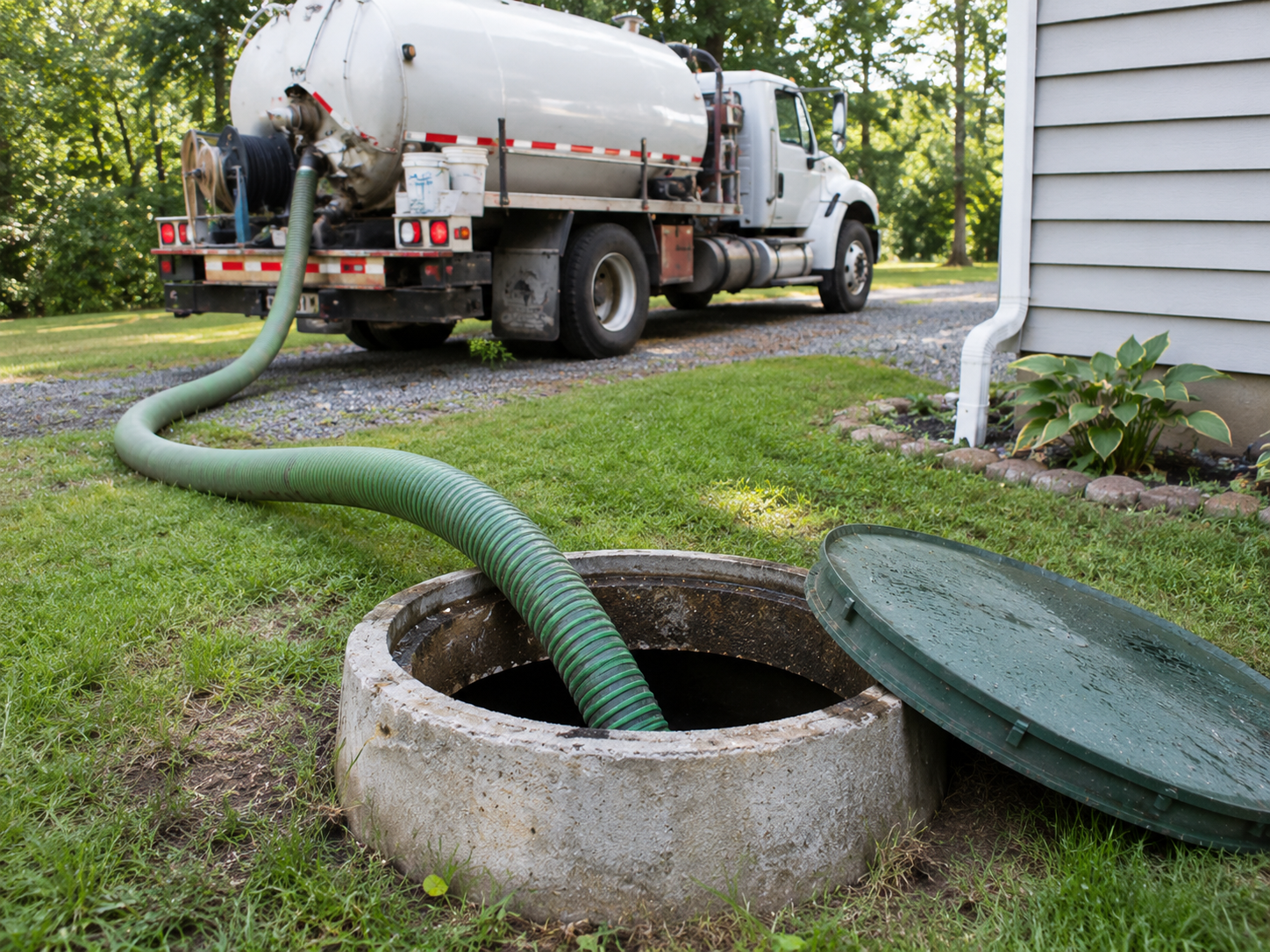
Septic tank cleaning” and “septic pumping” usually describe the same job: a pump truck removes the sludge and scum layers so the tank has room to work again. With the tank open and empty, it is also the easiest time to see its condition, including the inlet and outlet baffles. A damaged outlet baffle lets solids travel out to the drainfield, so it is worth asking about.
Pumping fixes a full tank. It does not fix a crushed pipe, a root intrusion or a drainfield that has stopped absorbing water. That is the reason to mention every sign you have noticed when you call, so the visit can be planned around the actual problem. Details on the service are on our septic pumping page.
What to do while you wait for service
If you are seeing signs of a full tank, a few steps reduce the load on the system until it can be pumped:
Spread out laundry instead of running several loads in one day
Keep showers short and avoid running the dishwasher and washing machine at the same time
Do not use the garbage disposal
Keep vehicles and heavy equipment off the tank and drainfield
Direct roof drains and other runoff away from the drainfield area
Note when each symptom started and which fixtures are affected, so you can describe it on the phone
Questions to ask when you book septic pumping
Will you locate and open every tank lid, including any second compartment?
Will you check the baffles and the liquid level while the tank is open?
Will I get a record of the pumping, including the date and the tank condition?
If you see signs of a drainfield or pipe problem, what will you recommend as the next step?
Frequently asked questions
How many years does it take for a septic tank to get full?
The time it takes a septic tank to fill depends on the tank size, the number of people in the home and how the system is used. The U.S. EPA says household septic tanks are typically pumped every three to five years and that the average system should be inspected at least every three years, which is how most homeowners stay ahead of a full tank.
Will a toilet flush if the septic tank is full?
A toilet may still flush when a septic tank is full, but it often flushes slowly, fills higher in the bowl, or gurgles. As the tank gets fuller, wastewater can back up into the lowest drains in the house instead of leaving through the toilet.
Can I take a shower if my septic tank is full?
Showering adds water to a septic tank that already has no room, which can push sewage into the lowest drains or out into the drainfield. Keeping water use to a minimum until the tank has been pumped reduces the chance of a backup.
What fills up a septic tank the most?
Solids fill up a septic tank the most. Toilet waste and food scraps settle as sludge on the bottom, while fats, oils and grease float to the top as scum. Items that do not break down, such as wipes, paper towels and feminine products, add to the solids and also clog pipes.
Can I clean my own septic tank?
Cleaning a septic tank is not a do-it-yourself job. It takes a pump truck to remove the sludge and scum, and the waste has to be hauled to an approved disposal site. A professional pumping visit is also the easiest time to see the condition of the tank while it is empty.
Septic pumping in Coos County
Econo Rooter Services, Inc. pumps septic tanks for homes in Coquille, Coos Bay, North Bend, Bandon, Myrtle Point, Lakeside, Powers, Langlois, Port Orford and Gold Beach. If you are noticing signs your septic tank is full, call (541) 396-4804 and describe what you are seeing, or reach us through our contact page. More detail is on our septic tank pumping page.