Sewer Camera Inspection in Coos Bay, OR
A lot of the homes and businesses Econo Rooter Services works on along the Oregon coast, from the older housing stock around Coquille and Bandon to properties near the water in North Bend and Coos Bay, are still running on the sewer lateral they were built with. That often means clay or cast iron pipe that's been in the ground for decades, sitting under yards with mature trees whose roots have had thirty or forty years to find every joint and crack in the line.
A sewer camera inspection is how a technician sees what's actually happening inside that pipe instead of guessing from what's backing up at the fixture end.
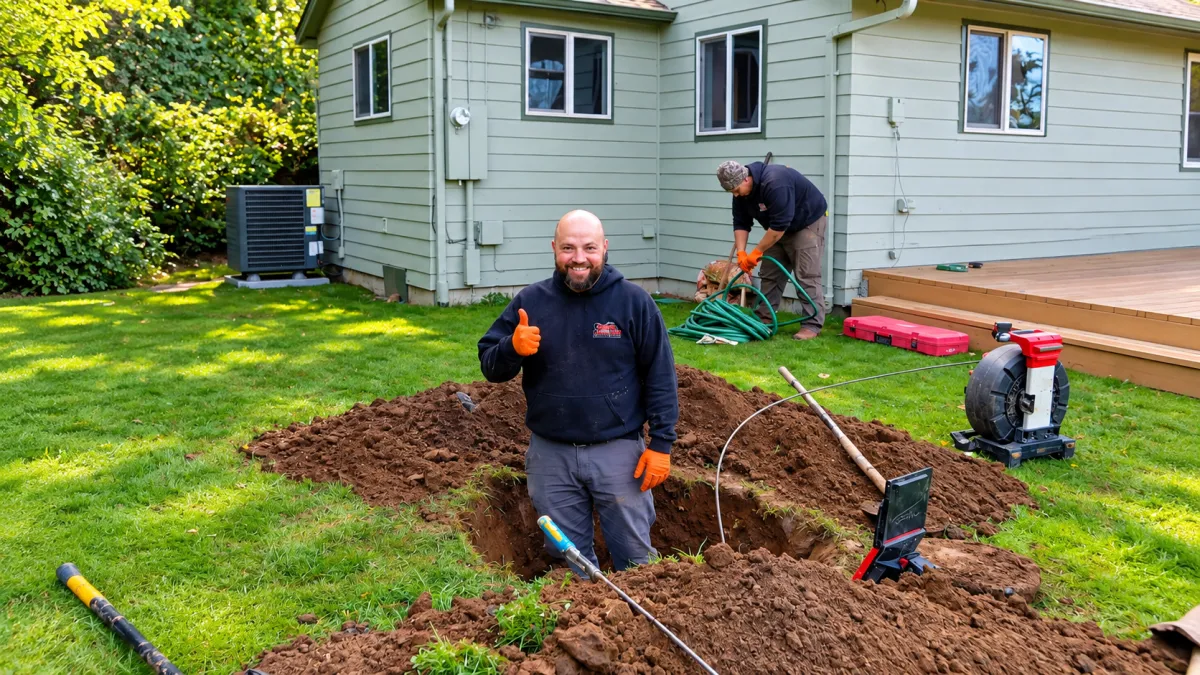
A sewer camera inspection feeds a waterproof video camera on a flexible cable through the line, usually from a cleanout or a code-access point, so a technician can see cracks, root intrusion, bellies, offset joints, and blockages directly on a monitor instead of estimating them from symptoms. It's the same tool used for a real estate sewer inspection before a home sale, just aimed at answering a different question: not "is this line sound enough to close on," but "why is this specific problem happening, and where."
What the camera actually finds
On older coastal lines, the same handful of issues show up again and again. Root intrusion is the most common, tree roots working into a hairline crack or a loose joint in clay or cast iron pipe and slowly filling the line.
Bellies, sections of pipe that have sagged and now hold standing water and debris, are common in yards that have settled over the years. Offset joints show up where ground movement has pulled two sections of pipe slightly out of alignment. And on the oldest cast iron runs, the camera sometimes shows scale buildup narrowing the inside diameter of the pipe until it's a fraction of what it was installed at.
None of these show up reliably with a snake alone. A snake can clear a clog; it can't tell a technician whether the clog is going to be back in six weeks because of a root mass, or whether the real problem is a low spot in the line that's collecting debris every time it rains.
When it's worth scheduling one
The clearest sign is a drain that keeps clogging in the same spot after it's been cleared. A single clog is usually just a clog. A repeat clog at the same fixture, or a slow drain that never quite comes back to full speed after a cleaning, is a sign something structural is going on further down the line, and that's exactly what a camera answers.
It's also the right call before buying an older home in Coquille, Bandon, Myrtle Point, or any of the other towns in the service area where the lateral predates modern PVC, which is the same reason a real estate sewer inspection exists as its own service. And it's worth doing before any major hydro jetting or excavation work, since seeing exactly where a problem sits (six feet from the house versus sixty) changes how a repair gets scoped. It's one piece of the broader sewer service work the team handles across the coast, cleaning, diagnosing, and repairing whatever the camera turns up.
What happens during the visit
The process starts with a line assessment: a technician locates the cleanout or another access point and gets a sense of the run before the camera goes in. From there, the camera is fed through the line while the technician watches the feed and notes the distance and location of anything worth flagging, most cameras carry a built-in locator so a problem seen on screen can be marked on the surface above it.
Once the camera has run the length of the accessible line, the technician reviews what it showed and walks through the findings in plain terms: what's there, roughly where it is, and what it means for next steps. That review is also where hydro jetting or a mainline repair gets discussed if the footage shows something that needs it, rather than being recommended sight unseen.
How long it takes and how to prepare
A straightforward residential inspection usually runs well under an hour once the camera is in the line, though a longer run, multiple access points, or a line that needs clearing before the camera can pass through all add time.
The easiest way to prepare is to know where the cleanout is, if there is one, and to clear any furniture, vehicles, or landscaping around it. Older Coos County properties don't always have a modern cleanout installed, in which case the technician will identify the best access point on site, which can mean the visit takes a bit longer to set up than it would on a newer system.
What makes it a quicker job versus a bigger one
Factor | What keeps it simple | What adds time and complexity |
Access | An existing cleanout at grade | No cleanout, requiring the technician to find another access point |
Line length and layout | A short, mostly straight run to the main | A long run with multiple bends or two lines to scope |
Line condition | Line already runs clear enough for the camera to pass freely | Roots or debris have to be cleared first so the camera can get through |
Pipe material and age | Modern PVC with intact joints | Older clay or cast iron with multiple joints and decades of ground movement |
Purpose | A single diagnostic scope for a known issue | A full-line real estate scope covering the entire lateral to the city main |
Worth asking before you book
A camera inspection is only useful if you actually get something out of it beyond a verbal summary. Worth asking before booking:
Whether the company will show you the footage or provide a copy, rather than just telling you what they saw
Whether the inspection is a standalone diagnostic step or bundled into a same-day repair estimate, since those are different services
Exactly what got scoped: the branch line from the house, the full lateral to the street, or both, since a partial scope can miss where the actual problem sits
A straight answer, not a sales pitch
The most common frustration people run into with sewer inspections generally isn't the inspection itself, it's not being sure whether the recommendation that follows is really what the pipe showed or just what's easiest to sell that day.
The way around that is simple: ask to see what the camera saw, and expect the explanation of what it means to match the footage, not the other way around. Every Rooter Service Econo Rooter Services provides is built on that same idea: diagnose first, explain clearly, then let the homeowner decide what happens next.
Frequently asked questions
How long does a sewer camera inspection take?
Most residential inspections take well under an hour once the camera is in the line. Longer runs, extra access points, or a line that needs clearing first will add time.
How much does a sewer camera inspection cost?
It depends on the factors above, mainly access, line length, and whether the line needs clearing before the camera can pass through. Pricing is quoted after a technician has a look at the specific property rather than estimated over the phone.
Does every company charge the same for a camera inspection?
No. Some companies price it as a standalone diagnostic, others build it into a repair estimate. It's worth asking upfront which approach a company uses before scheduling.
How do I prepare for a sewer camera inspection?
Locate the cleanout if the property has one and clear the area around it. If there's no visible cleanout, the technician will identify the best access point during the visit.
Is a sewer camera inspection the same as a real estate sewer inspection?
They use the same equipment, but the purpose is different. A real estate sewer inspection scopes the full lateral ahead of a home sale. A standard diagnostic inspection is usually aimed at a specific, known problem.
Getting a camera inspection scheduled
Econo Rooter Services runs sewer camera inspections across Coos Bay, Coquille, Bandon, North Bend, Myrtle Point, Lakeside, Gold Beach, Port Orford, Powers, and Langlois. If a drain keeps backing up in the same spot, or a home you're looking at on the coast still has its original lateral, a look at the actual line is the fastest way to get a real answer instead of a guess.
Reach the team through the sewer services page to see the full range of diagnostic and repair work, or go straight to contact us to get a visit scheduled. For lines that come back clean on camera but are still running slow, hydro jetting is often the next step, and for anything the camera shows that needs more than cleaning, the same team handles sewer mainline repairs and installations.